
Patients & families
What to expect from Gliovac, how the early access program works, and how treatment is organised.
What to expect from Gliovac/ERC1671/SITOIGANAP?
The overall survival rate for patients that have been treated with Gliovac/ERC1671/SITOIGANAP on a compassionate use basis, reached 39, 36, 34 and 22 weeks, which is largely above the statistical theoretical survival of 9 weeks. This will be confirmed scientifically after the completion of our clinical trial, presently taking place in the US.Preliminary data suggests that Gliovac/ERC1671/SITOIGANAP may be an efficient treatment which could significantly increase patients survival.

Glioblastoma treatment - Gliovac/ERC1671/SITOIGANAP early access program
Patients facing serious illnesses and who have exhausted all available treatment options often want to know if and how they can receive early access to investigational products that haven’t yet been approved by government regulatory agencies. ERC is committed to making its products available to patients, when appropriate, throughout the development process.
ERC believes participating in clinical trials is the best way for patients to access medicines prior to approval. In pursuit of ERC’s objective to develop highly effective and safe therapeutic approaches, the successful completion of a clinical trial program of investigational products is the most effective way of ensuring timely review and decision-making by government regulatory agencies. This will ultimately result in access to new, safe and effective approved therapies for patients. For these reasons, ERC prioritizes access to its investigational products through active and accruing clinical trials and encourages interested patients to enroll.
Early Access to GLIOVAC/ERC1671/SITOIGANAP
Despite best efforts, it is not possible for all patients to participate in clinical trials. For that reason, ERC has established an early access program in a number of regions.
In the U.S., patients interested in seeking Right-to-Try (RTT) access to an ERC investigational product should talk to their physician. An eligible physician may request access to one of ERC’s investigational products by completing the ERC Right to Try Request Form. For more information please contact Chris Beardmore at compassionateuse@anovaevidence.com
Patients interested in seeking early access to ERC products may also be approved under the U.S. Food and Drug Administration’s Expanded Access program. Cases may be approved to proceed under Expanded access when ERC products are used in combination with other investigational products, when the case is serious but not life-threatening or at the request of the patient’s treating physician. For more information, please contact ERC at expanded-access@erc-immunotherapy.com
In Australia, patients interested in seeking early access to an ERC investigational product under Category A of the TGA Special Access Scheme (SAS) should talk to their physician. An eligible physician may request access to one of ERC’s investigational products by completing the ERC Special Access Scheme Request Form.
Requests for further information about how to apply for early access or determine qualifications and capabilities required to administer ERC investigational product can be made to medicalaffairs@erc-immunotherapy.com
ERC is also willing to consider early access requests outside of these regions.
ERC typically will acknowledge receipt of a request, with required medical documentation, within three business days. ERC professionals will carefully consider requests taking into account access to open and accruing clinical trials, the serious/life-threatening nature of the disease, biological rational or clinical data supporting potential benefit medical appropriateness, and applicable laws and regulatory requirements. All physicians who receive ERC investigational product through RTT or SAS are required to comply with all applicable laws and regulations, and contractual conditions, including those related to safety reporting.
ERC’s Right to Try Policy can be found here.
ERC’s Special Access Scheme Policy can be found here.
Gliovac/ERC1671/SITOIGANAP Treatment process
The cycle of the Gliovac/ERC1671/SITOIGANAP treatment
Tissue collection
Transport to ERC-The Netherlands
Production of Gliovac/ERC1671/SITOIGANAP in The Netherlands
Treatment, administration of Gliovac/ERC1671/SITOIGANAP
What are the components of a Gliovac/ERC1671/SITOIGANAP Cycle and when are they administered?
After 6 cycles (6 months) of treatment follows a Rest period of 2 months.
Thereafter, if necessary, the following administration schedule is implemented
- Booster cycles 7 & 8 – from week 34
- Rest period of 4 months
- Booster cycle 9 & 10 – from week 58
- Rest period of 6 months
- Booster cycle 11 & 12 – from week 90
The maximum amount of cycles that can be administered is 12 during a 2 year period.
For more information, please contact ERC.
Clinical Trials with Gliovac/ERC1671/SITOIGANAP
For more information please contact:
The Chao Family Comprehensive Cancer Center
University of California, Irvine Medical Center
Phone: 01-877-827-8839
Email: UCstudy@uci.edu
Details of the clinical trial can be found at: https://clinicaltrials.gov/ct2/show/NCT01903330?term=Bota&rank=1
Patient treated with Gliovac/ERC1671/SITOIGANAP
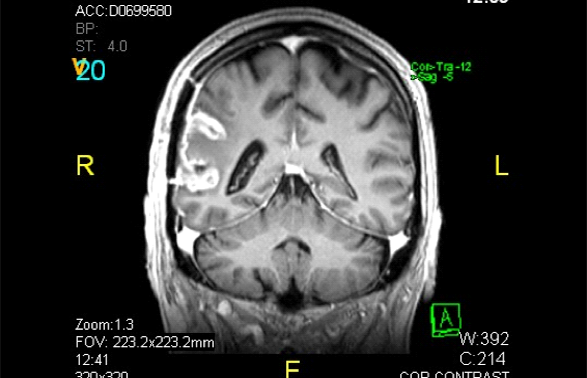
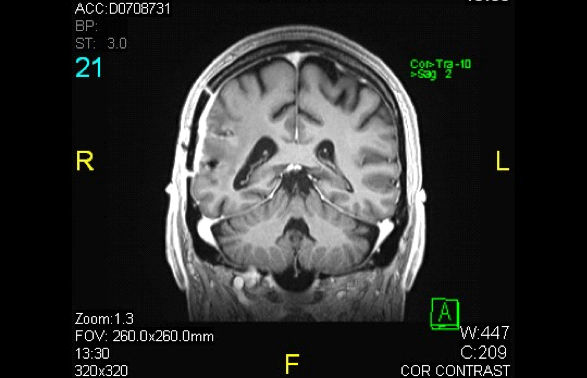
Scans of a patient before and after treatment.